
CTRL+X Goes to the International Journalism Festival
The CTRL+X takeaways from IJF 2026 in Perugia, Italy.


The International Journalism Festival in Perugia has been on my professional bucket list for years — I'd heard about it from several editors and media product people I respect. This year, twenty years into its run, I went wearing two hats: founder of CTRL+X seeking community alignment, and journalist on assignment to explore the hot topics in digital publishing infrastructure. I wanted to understand where and how new revenue models are emerging through technological innovation for an industry on life support.
The festival was founded in 2006 by Arianna Ciccone and Christopher Potter, and it's free and open to the public as service journalism would be in a perfect world. No tickets, no paywall—you just show up in a thirteenth-century town in Umbria and walk between gothic palaces and medieval churches that have been temporarily converted into conference venues. Over four days you can attend any of two hundred-plus sessions alongside thousands of journalists and journalism-adjacent supporters from every continent. It is a gathering filled with people undoubtedly committed to furthering the true meaning of the craft. It's also where the global journalism industry takes its temperature each spring.
While I have no baseline to compare against, this year, the readings were not encouraging.
What’s clear from attending IJF is that the journalism industry, which was already on life support, is in a state of shock after suffering a lethal blow from emerging AI businesses this past year. AI is rapidly cannibalizing what remains of a system that has been largely torn apart by the failed ad models and data mining operations of the previous decade. All the big philanthropic players were there registering how much more they were going to need to do to continue to prop things up, while big tech vultures waited in the wings. Everyone was aware of the problems, but solution dialog revolved largely around mitigation and triage.
Of all the sessions I attended, there were three that were especially relevant to my daily work building CTRL+X. I asked a question on the mic during the Q&A portion of each, and left Italy emboldened to continue building digital media infrastructure.
Testing the Platforms: Investigative Journalism, Accountability and Policy Impact
On Thursday, April 16, 2026 Clara Jiménez Cruz of Maldita, Tai Nalon of Aos Fatos, and Alexios Mantzarlis of Indicator, walked through the state of platform accountability reporting, moderated by Julie Posetti. Maldita reported fifteen accounts containing child sexualization content through official channels; the platforms ignored the reports for months, then took the accounts down within thirty minutes once Maldita published. Aos Fatos tracked eighty-three big tech lobbying visits to the Brazilian Congress in a single year, tied to fifteen legislative attempts to weaken regulation. The technical capacity to do better exists. The will doesn't.
I asked about the structural question underneath all of it: how should platforms be designed and governed from the start to avoid these failures? On the one end of the spectrum there is the need to ensure platforms remain free of child endangerment material, while on the other end you have the Substack CEO throwing his hands up and refusing to deplatform Nazis because he doesn’t want to commit “censorship” — with CDA 230 looming over the whole issue of course. Alexios offered a useful harm-and-responsibility matrix: platforms have varying obligations depending on whether they're passive interfaces or active amplifiers — and Clara pointed to a tactical workaround: hold platforms to their own stated policies, sidestepping the free speech argument entirely. Both responses described better policing of broken systems. Neither addressed the architecture.
How a Desire to Tell Stories Can Lead to Bad Journalism
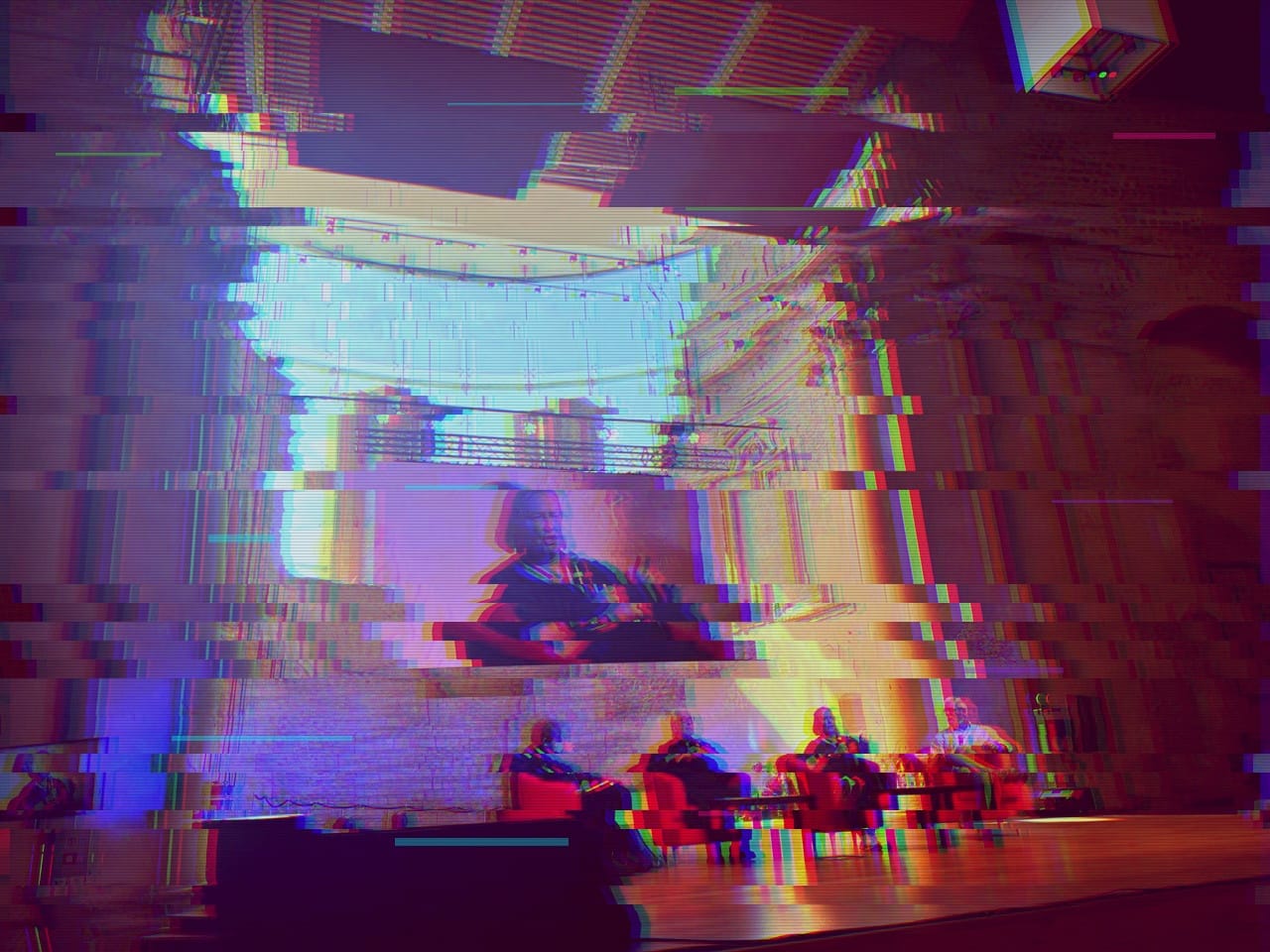
Alan Rusbridger, Richard Gingras, and Emily Bell, moderated by Mathew Ingram, took on the storytelling format itself. Rusbridger noted that recent UK television dramas have told the Post Office Horizon scandal and the water industry pollution story more rigorously than journalism did — Channel 4 used naturalistic acting overlaid with on-screen footnotes evidencing every claim. Bell delivered the panel's sharpest moment: a senior Dutch editor recently lost his job after publishing AI-generated quotes from five "experts," four of whom had never been interviewed. One of them was her.
I asked how the collapse of journalistic institutions has changed the ability to tell stories well — articles now carry one or two bylines, but quality journalism used to involve up to twenty people touching a piece before publication. Gingras agreed that "real reporting is a collective act, not an individual one," and pointed to Village Media's Ontario newsrooms as a sustainability model. Bell was more direct, and told me: “Economic disempowerment makes everything in journalism more difficult. I think the constant unbinding of the press by a propaganda machine which operates largely through the platforms of meta and tick tock and YouTube, etc, is incredibly powerful.” The format problem and the production-collapse problem turn out to be the same problem. She continued: "You are doing God's work with distributed tools. This is where it's going. Journalism is going to have to peel itself away and be completely separate and small and distributed… That's the future: telling stories in ways where you can get through the cracks.”
Witness to War: How Journalists Can Safeguard Digital Evidence for Justice
Rebecca Bakos Blumenthal of Global Rights Compliance, Basile Simon of Stanford's Starling Lab, and Emily Tripp of Airwars — moderated by Frederik Obermaier of paper trail media — spent fifty minutes describing the cryptographic infrastructure journalism needs to make its work survive as evidence years after publication. Hashes at the moment of capture. Documented chain of custody. Pseudonymous group signing to protect sources without breaking integrity. The technical primitives CTRL+X is being built around were the through-line of the entire conversation.
I asked about how the business failures of journalistic institutions affect the provenance of war-related artifacts, how the fragility of the Internet Archive ties in, and whether cryptographic tools are ready to help. Simon's answer was that although It's great to have resources like legacy pubs and digital archives around, none of them are perfect. Especially for those journalists which have forensic standards, such as the ones reporting war crimes, "Relying on the commons, which is relying on someone else to do the job of preserving it for you, is perhaps not the best you can do… Do the best you can by preserving integrity markers as early as you have them, so you might be able to rely on them later." The question of how journalists should go about digital preservation using cryptographic tools is one all of our respective orgs will be addressing over the coming years.
Building the Future of Journalism
Three panels, three questions, one through-line: journalism's infrastructure was rented, and the lease is being revoked in several different ways and for many reasons.
I founded CTRL+X because I believe the rebuild has to happen at the protocol level and that our digital knowledge base is too precious to expect one institution to be responsible for its maintenance. By giving authors the means to control ownership, distribution, and monetization, we are building a more robust and resilient knowledge graph.
Next year in Perugia, hopefully I’ll be on stage talking about the learnings from CTRL+X’s first year of live user testing!
Lukas Hüttis and Glitch Albatross contributed to this essay.